Last updated 2026-08-19
TL;DR
Delaware does not issue a farm adjuster license by that name. Your paper path is a Delaware adjuster or public adjuster license if the Department of Insurance says your role needs one, plus USDA RMA qualification if you handle federal crop claims. Fees sit in Title 18 Chapter 7. Processing time is not published. Confirm both with the board before you spend money.
Do you need a license for farm adjuster in Delaware?
Delaware does not issue a license named farm adjuster. You may still need a Delaware insurance license if the Department of Insurance treats your role as a class it regulates, and you need USDA Risk Management Agency qualification if the policy is federal crop insurance.[1][6]
That is the whole answer. The rest is how you apply it to the file in your truck.
Farm work in Delaware is not one job. A hail loss on corn in Kent County is not the same paper as a broiler house fire off Route 13. Neither is the same as a multi-peril soybean claim on an FCIC policy. People mash those together and then buy the wrong exam.
If you sell, solicit, or negotiate insurance, you are in producer territory. Delaware law is blunt. Title 18, § 1703 says: "A person shall not sell, solicit or negotiate insurance in this State for any class or classes of insurance unless the person is licensed for that line of authority in accordance with this chapter."[1] Adjusting a claim is not automatically selling a policy. Do not assume a producer license is the farm adjuster card. It is not.
If you represent the insured for a fee on a first-party farm claim, ask DOI about a public adjuster license before you open a file. If you represent an insurer as staff or independent, ask whether Delaware even issues an independent adjuster class for that work. Some states do. Some only police public adjusters. I will not guess your fact pattern for you.
Federal crop is a second stack. Congress put the Federal Crop Insurance Corporation inside USDA. 7 U.S.C. § 1503 states: "To carry out the purposes of this chapter, there is hereby created as an agency of and within the Department a body corporate with the name 'Federal Crop Insurance Corporation.'"[7] Your AIP and the RMA loss adjustment standards control whether you sign a production worksheet. The state card does not replace that.[6][8]
Call producer licensing at the Delaware Department of Insurance and ask one clean question: for this role, this principal, and this policy type, what license class if any do you require? Then build the file around that answer.
What license does Delaware actually issue for farm claim work?
Delaware issues insurance producer licenses under Title 18, Chapter 17, and it sets the related fees in Title 18, Chapter 7. It does not print a wallet card that says farm adjuster.[1][2]
You will see three live paths on Delaware farms.
Path one is federal multi-peril crop insurance. The policy is an FCIC product. Qualification sits with the Approved Insurance Provider and with RMA handbooks, including the Loss Adjustment Manual standards.[6][9] You work through an AIP or a loss-adjustment contractor. The state may still want a license. Ask. Do not skip the call because someone on a harvest crew said crop is federal only.
Path two is private crop-hail. That is not FCIC. The company that wrote the hail companion policy decides who it will appoint. A lot of that training culture runs through National Crop Insurance Services.[12] Delaware can still require a license if your activity matches a class it regulates.
Path three is ordinary farm property and casualty. Farmowners, scheduled machinery, poultry houses, barns. Public adjuster rules matter if you work for the grower. Company and independent rules matter if you work for the carrier. Confirm the class list on a current NIPR or Department application, not on a blog from 2019.
| Work type | Who you represent | Typical paper | Who confirms it |
|---|---|---|---|
| Federal MPCI | AIP on an FCIC policy | RMA adjuster qualification plus AIP contract | USDA RMA and the AIP |
| Private crop-hail | Hail insurer or its TPA | Company appointment and crop-hail training, plus any DE license DOI names | The insurer and DE DOI |
| Farmowners and farm P&C | Insurer or insured | DE adjuster or public adjuster class if DOI requires one | DE DOI |
If you want a comparison for how messy state names get, skim the farm adjuster license in Alabama and farm adjuster license in California guides. Do not copy those checklists onto a Dover application. The statutes are different.
How much does a farm adjuster license cost in Delaware?
There is no honest single sticker price for a farm adjuster license in Delaware because the state does not sell that named license. Your cost is the Delaware license class you actually need (if any), plus exam and fingerprint charges, plus whatever your AIP or hail company requires.
Delaware sets insurance license fees in Title 18, Chapter 7 of the Delaware Code. Read § 701 and then confirm the live amount with the Department of Insurance. I am not going to type a dollar figure that may be stale by the time you apply.[2] Boards change schedules. People get into refund fights because they paid last year's number.
Budget categories that are real, even when the cents move:
State application and license fees under Chapter 7. Confirm them. An exam fee if Pearson VUE lists an exam for your class. Confirm on the current Delaware insurance exam page.[3] Fingerprint or criminal history charges through the channel DOI names, often involving the State Bureau of Identification.[11] NIPR transaction fees if you apply through NIPR.[4] A surety bond if your class requires one. Confirm the penal sum. Do not buy a $50,000 bond because a Facebook group in another state uses that number.
RMA and company training time is a cost too. A lot of MPCI training is employer-scheduled. Your bill is often unpaid days and fuel, not a tuition invoice. Price errors and omissions insurance only after you know the class.
What I would actually do: print Chapter 7, open the current DOI fee note or NIPR fee screen, and write the numbers in the margin the same day you apply. What I would not do: buy a national farm adjuster certification that is not on the Delaware class list. That is a waste of money.
If you only needed a forms gathering packet before that call, CropHailPath sells a $179 one-time Farm Adjuster Form Kit at /start. You do not need it to finish this guide.
How long does farm adjuster licensing take in Delaware?
Nobody can give you a promised Delaware processing time, and anyone who does is selling comfort. The Department does not publish a farm-adjuster service standard, and federal crop onboarding follows the AIP calendar, not your wish to be storm-ready by June.
A clean resident application that needs an exam, fingerprints, and a NIPR submission can be a few weeks when every piece hits. It can also sit. Background hits, name mismatches, and unpaid fees are the usual stalls. I have no public dataset on Delaware median adjuster turnaround. Treat two-week talk as gossip.
Federal crop is slow in a different way. AIPs hire and train on a season. RMA standards training and company proficiency checks happen when the contractor has a class, not when you uploaded a PDF at 11 p.m.[6][9] If you start in April and want corn hail work in June, you are already late for some shops.
Practical sequence I would run:
Week 1: call DOI, get the class name in an email, read Chapter 17 and Chapter 7.[1][2] Same week: create the NIPR account if they tell you to apply there.[4] Then book the Pearson VUE exam only if that class has an exam.[3] Then fingerprints through the named vendor.[11] Then submit. After that, you wait. You do not call daily.
Nonresident paperwork adds home-state good standing. If your home state is slow, Delaware is slow with it. Crop-hail company appointment can be fast after you are hirable, or it can wait until they need bodies in Sussex County. That is a staffing decision, not a license clock.
What is the paper path for federal crop insurance work in Delaware?
If the policy is federal multi-peril crop insurance, USDA RMA rules control the loss adjustment work product. Delaware residency does not replace that.
RMA publishes loss adjustment standards and the Loss Adjustment Manual that adjusters use in the field.[6] Program administration sits in 7 CFR Part 400.[9] Coverage architecture lives in 7 U.S.C. § 1508.[8] Approved Insurance Providers operate under the Standard Reinsurance Agreement with FCIC.[10]
Your real path looks like employment or contract work, not a walk-in state exam.
You apply to an AIP or to a loss-adjustment firm the AIP uses in the Mid-Atlantic. They run their background check. They put you in RMA-required training and their own crop modules. You do not write your own production worksheet the first morning. You shadow. You fail a quiz and retake it. That is the job.
Delaware still may want a state license for the same human. Ask DOI with the AIP name in the sentence. Some compliance shops insist on a state adjuster license even when the policy is federal. I will not tell you to ignore a carrier compliance list.
Delaware field crops that generate this work are mostly corn, soybeans, wheat, and barley, with vegetables in pockets. USDA NASS keeps the current state overview if you need to see what is actually planted.[13] University of Delaware Extension's Weekly Crop Update is the local weather-and-growth read I would follow during the season, because it matches what growers will say at the kitchen table.[14]
Do not buy a generic ag adjuster diploma and expect an AIP to care. They care whether you are in their system and whether your work survives a quality control review.
How does private crop-hail adjusting work in Delaware?
Private crop-hail is a company policy. It is not the FCIC MPCI policy, even when the same grower holds both and the same storm hit both.
You get hired or appointed by the hail writer or its independent adjusting firm. They train you on their policy and on field procedure. A large share of U.S. crop-hail training and statistical culture runs through National Crop Insurance Services.[12] That is industry infrastructure, not a Delaware card.
Then you ask Delaware the same question as everyone else. Does this activity require a state license class? If DOI says yes, you apply for that class. If DOI says company adjusters on hail are not a licensed class in Delaware, get that in writing and keep it with the appointment letter.
Hail windows in Delaware are short. Summer convection and the odd tropical remnant do the damage. You will not get six months to gear up after the first ugly squall line. Paper before the season. Always.
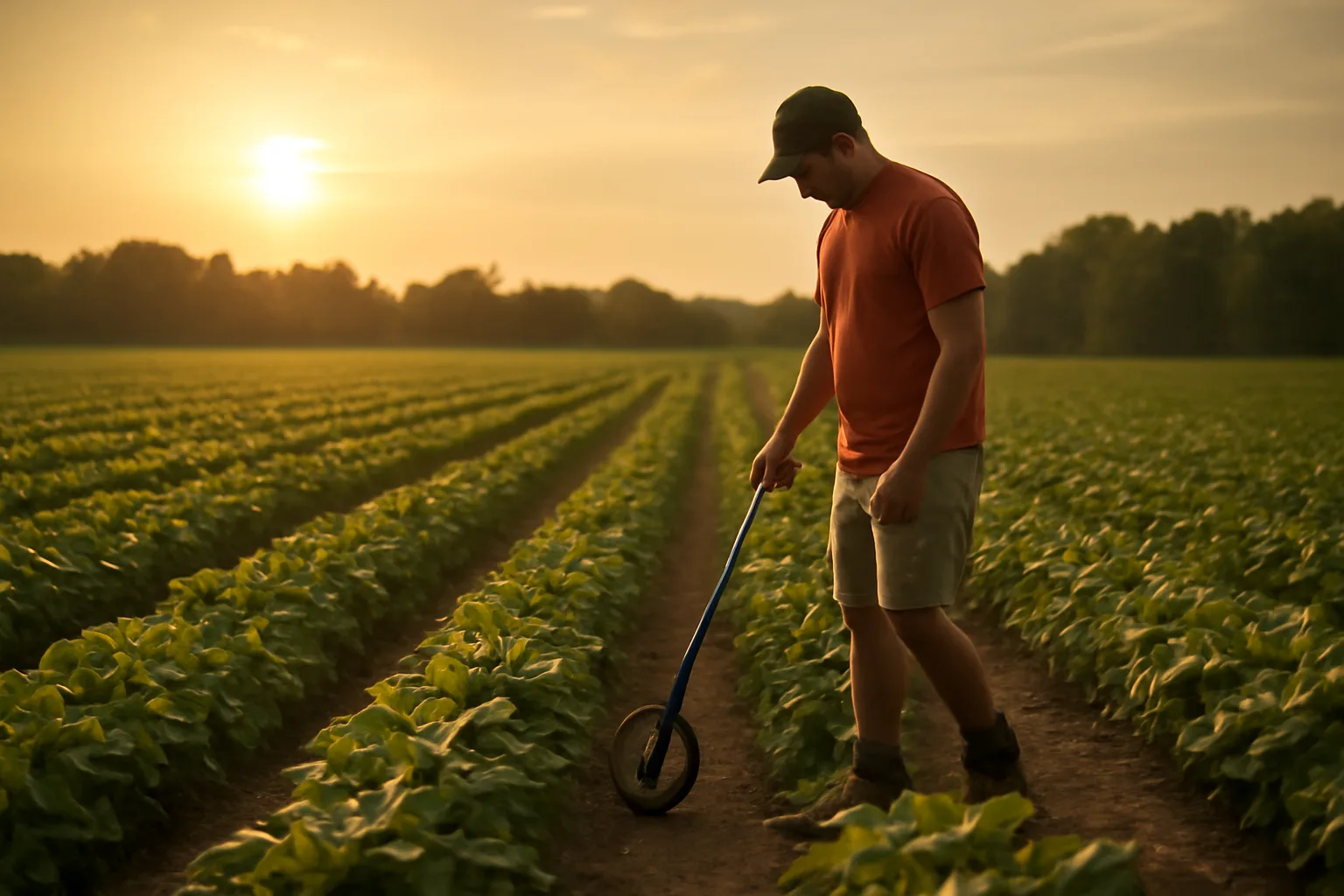
I would not spend money on a national hail gadget kit before I had an appointment. Measuring wheels and stand counts matter, but unused gear is how first-year people light cash on fire. Get the company method first.
If you are comparing how other states name this work, the farm adjuster license in Arkansas and farm adjuster license in Colorado writeups show different state habits. Use them as contrast, not as Delaware instructions.
Do you need a public adjuster license for Delaware farm claims?
You need a public adjuster license if you are doing public adjusting, which means you represent the insured for compensation on a first-party claim. You do not need one to work for the insurance company as a staff or independent adjuster, unless Delaware has layered extra rules on that fact pattern. Confirm the current class list.
Farm families get confused after a barn fire. A neighbor offers to handle the claim for a cut of the check. That is the moment people stumble into public adjusting without meaning to. If you take money from the insured to negotiate with their carrier, you are not a helpful cousin. You are in a regulated role.
I will not invent Delaware's bond amount, exam name, or fee for public adjusters. Those are confirm-with-the-board facts. Use NIPR and the Department.[4][2]
If you work for the carrier on the same barn, you are on the other side of the table. Different hat. Different paper. Do not freelance both sides of a Sussex County loss. That is how you collect complaints and a short career.
Poultry complexes and grain bins throw big numbers. Public adjusting those files without the license is a bad bet. The honest move is a phone call to DOI before the first letter of representation.
What exam and background check does Delaware use?
Pearson VUE administers Delaware insurance licensing exams.[3] You only sit an exam if your license class has one. A farm-only exam does not exist.
Look up the current Delaware insurance series on Pearson VUE. Book the exact exam code DOI names. Do not study a 200-question national adjuster pile if Delaware did not assign that content outline.
Fingerprints and criminal history run through the process the Department names. The State Bureau of Identification is the state criminal history shop.[11] Out-of-state applicants often use a channel NIPR or DOI spells out. Follow that letter. Do not mail a random county sheriff card and hope.
NIPR is the national application pipe Delaware uses for a lot of resident and nonresident insurance licensing.[4] If DOI tells you to apply in NIPR, that is the front door. If they tell you to use another portal or a paper form for a rare class, use that instead. The application path is a board fact, not a personality preference.
Study materials: buy the outline that matches the exam code. One outline. Not four vendors. Owning three prep courses for an exam you were never assigned is a waste of money.
After you pass, attach the score, the prints, and the fee in one submission. Incomplete packages age badly.
Can you adjust Delaware farms if you live in Maryland or Pennsylvania?
Maybe. Nonresident licensing exists for many Delaware insurance classes under Chapter 17, but only if Delaware requires a license for your role and only if your home-state good standing is clean.[1]
If you already hold a home-state public adjuster or independent adjuster license, ask DOI whether Delaware will issue the matching nonresident class. Reciprocity is not a vibe. It is a checklist: home license, NIPR application, fees in Chapter 7, any extra bond or affidavit.[2][4]
If your work is only federal crop, your AIP may send you across the Delaware line because the unit is in Kent County this week and Caroline County last week. That still does not answer the state license question. Ask compliance at the AIP and ask DOI. Two answers. Keep both.
Border practice is normal here. The state is small. Storms do not stop at the line. What gets people in trouble is assuming a Pennsylvania or Maryland card is automatically enough. It might be. It might not.
Read the farm adjuster license in Alaska guide if you want to see a jurisdiction that feels nothing like the Delmarva peninsula. Then come back and do the Delaware call anyway.
What first-year paper is worth doing, and what is a waste?
Worth doing: the DOI class confirmation, the Chapter 7 fee check, the correct Pearson VUE exam if assigned, fingerprints, NIPR, your AIP or hail appointment, and RMA training if you touch MPCI.[2][3][4][6]
Also worth doing: a simple field kit the company specifies, a vehicle that can handle farm lanes after rain, and a habit of writing the grower's unit structure down before you argue yield.
Waste of money: a framed certified farm adjuster certificate from a site that is not DOI, RMA, NCIS, or your AIP.[12] Waste: buying every state license just in case before you have a single Delaware file. If you later need Arizona paper, use that state guide when the work is real. See farm adjuster license in Arizona only when you have an Arizona claim, not as pre-season shopping.
Waste: paying a coach to expedite a Delaware license. There is no honest private expedite of a background check.
I would keep a one-page binder tab list: DOI email, NIPR number, exam code, print receipt, appointment letter, E&O dec page, RMA course roster. That is the first-year operations kit. Ugly. Sufficient.
If you are still assembling blank forms and want a packaged checklist, the CropHailPath Farm Adjuster Form Kit is the $179 one-time option at /start. This article already gave you the order of operations without it.
How do you keep a Delaware insurance license once you have it?
You keep it by renewing on the Department's cycle, paying the Chapter 7 renewal amount then in force, and completing any continuing education the class requires.[2][5]
Delaware writes producer CE in 18 DE Admin. Code 504.[5] Read the current text for hours, ethics, and whether your adjuster class is even in that regulation. I am not going to invent a credit-hour number. Open 504. If your class is listed, follow it. If public adjusters have a different rule, follow that rule.
Federal crop has its own seasonal training reset through the AIP and RMA standards. Missing a company module can pull you off the roster even if your state license is green.[6][10]
Address changes, legal name changes, and administrative actions in other states belong on the renewal. Hiding a home-state suspension is how nonresident licenses die.
I would set a calendar reminder 60 days before the expiration on the license document, not the date you remember from a cookout. Renewals fail on expired payment cards.
Compare first-year stacks across states if you hold more than one card. The how to start farm adjuster in California and how to start farm adjuster in Colorado pieces show different paper. Delaware stays small. Keep the file small with it.
How do you confirm Delaware fees and forms before you pay?
You confirm on primary paper, not on memory.
Pull Title 18, Chapter 17 for the license framework and Title 18, Chapter 7 for fees.[1][2] Pull 18 DE Admin. Code 504 if CE is in play.[5] Open the current Pearson VUE Delaware insurance page for exam names and test-day rules.[3] Open NIPR if that is the application door.[4] Call Delaware Department of Insurance producer licensing and ask them to name the class for farm or crop-hail adjusting.
If the work is MPCI, add the RMA loss adjustment standards page and your AIP's adjuster onboarding packet.[6] If the work is crop-hail, add the hiring company's instructions and, if they use it, NCIS training.[12]
Write down the date of each confirmation. Fee schedules move. A screenshot of the NIPR fee screen next to a note that says you called DOI, named class X, and were told there is no farm-adjuster title is the file I would want if someone later claimed you needed a product that does not exist.
Last check: you are not looking for approval theater. You are looking for a class name, a fee, an exam code or a written no exam, and a yes or no on fingerprints. When those four are on paper, apply. Until then, keep your wallet shut.
This site is an independent publisher, not a law firm and not a service company. If you hold multiple states, do not assume another state's timing applies here. Delaware is its own board.
Frequently asked questions
Do you need a license for farm adjuster in Delaware?
Delaware does not issue a farm adjuster license by that name. You need whatever license class the Delaware Department of Insurance requires for your role, which may be none, a public adjuster license, or another adjuster class. Federal crop work also needs USDA RMA qualification through an AIP. Confirm the class before you adjust a Delaware risk.
How much does farm adjuster cost in Delaware?
There is no single farm adjuster fee. Cost is the Chapter 7 license fee for the class you need, plus Pearson VUE exam fees if an exam applies, fingerprint charges, NIPR fees, and any bond or E&O your company wants. Read 18 Del. C. Chapter 7 and confirm live amounts with DOI. Ignore national price lists.
How long does farm adjuster take in Delaware?
There is no published processing standard. A complete state application can move in weeks or stall on prints and deficiencies. Federal crop onboarding follows the AIP training calendar and can miss a season if you start late. Do not plan storm work on a promised date from a recruiter.
Is crop insurance adjusting the same as farmowners adjusting in Delaware?
No. Federal MPCI is an FCIC policy under 7 U.S.C. § 1508 and RMA handbooks. Farmowners is ordinary property and casualty. Crop-hail is usually a private companion policy. Each stack has different principals and different paper. A barn fire file does not train you to write a soybean production worksheet.
Can a Maryland adjuster handle a Delaware farm claim?
Only if Delaware does not require a license for that role, or if you hold the matching Delaware nonresident class in good order. Home-state authority is not automatic extra-territorial power. Ask DOI and your carrier compliance shop before you cross the line with a closed file.
Does Delaware license independent adjusters?
Treat this as a confirm-with-the-board fact. Delaware licenses producers under Chapter 17 and regulates public adjusting. Whether it currently issues a resident independent adjuster class for company-side farm work is a question for producer licensing and the live NIPR class list, not for a guessed statute number.
Do I need a surety bond to adjust farms in Delaware?
Only if the license class you are told to hold requires a bond, or if your AIP or hail company requires one by contract. I will not invent Delaware's penal sum. Ask DOI for the class requirement and read the company appointment. Buy the bond after those two answers, not before.
Is there a farm adjuster exam in Delaware?
No exam titled farm adjuster. If your required license class has an exam, Pearson VUE administers Delaware insurance exams and you sit the code DOI names. Federal crop tests are company and RMA modules, not a state farm exam. Do not study the wrong outline.
What is NIPR and do I have to use it?
NIPR is the National Insurance Producer Registry application network. Delaware uses it for many insurance license applications. If DOI tells you to apply through NIPR, that is the door. If they name a different portal or a paper form for a rare class, use that. Follow the board, not a habit from another state.
Does poultry house claim work need the same license as grain hail?
Often no, because the policies differ. A poultry house is usually farm property. Grain hail may be private crop-hail or part of an MPCI unit discussion. Ask DOI about the role you will actually perform. Then ask the carrier which appointment they need. Two answers.
Can I start during hail season without a license?
If DOI requires a license for your role, working the storm without it is the kind of shortcut that ends careers. If your role is federal crop, an AIP will not put you on a roster without their qualification steps. Get the class answer before the forecast turns ugly.
Who do I call to confirm a Delaware farm adjuster requirement?
Call the Delaware Department of Insurance unit that handles producer and adjuster licensing. Ask them to name the class for your principal and policy type. Pair that call with Chapter 17, Chapter 7, and, if the policy is MPCI, your AIP plus the RMA loss adjustment standards page.
Do I need a Delaware resident license if I only work federal crop?
Not automatically, and not instead of RMA and AIP qualification. You may still need a Delaware license if DOI says the activity is a licensed adjuster class. Nonresident paper may be enough if a license is required and you already hold a home-state license. Confirm both stacks.
What continuing education do farm adjusters complete in Delaware?
Complete the CE that applies to the license class you hold. Producer CE is addressed in 18 DE Admin. Code 504. Read that regulation for the current hour rules. AIP and RMA modules are separate and still mandatory if you adjust MPCI. Missing company training can idle you with a live state license.
Sources
- Delaware Code Title 18, Chapter 7 Fees and Taxes: Delaware sets insurance license and miscellaneous fees in Title 18, Chapter 7; current dollar amounts must be confirmed with the Department.
- 18 DE Admin. Code 504 Continuing Education: Delaware sets insurance continuing education rules in 18 DE Admin. Code 504.
- USDA RMA Loss Adjustment Standards: USDA RMA publishes loss adjustment standards and related handbooks that govern federal crop insurance adjusting.
- 7 U.S.C. § 1503 Federal Crop Insurance Corporation: Congress created the Federal Crop Insurance Corporation as an agency within USDA in 7 U.S.C. § 1503.
- 7 U.S.C. § 1508 Crop insurance: Federal crop insurance coverage rules are set in 7 U.S.C. § 1508.
- 7 CFR Part 400 FCIC general administrative regulations: FCIC general administrative regulations for the federal crop insurance program are in 7 CFR Part 400.
- USDA RMA Standard Reinsurance Agreement: Approved Insurance Providers operate federal crop insurance under the Standard Reinsurance Agreement with FCIC.
- Delaware State Police, State Bureau of Identification: The Delaware State Bureau of Identification handles state criminal history processes used in many licensing pipelines.
- National Crop Insurance Services (ag-risk.org): NCIS is the primary industry body behind much U.S. private crop-hail training and loss data.
- USDA NASS Delaware agriculture overview: USDA NASS publishes the current Delaware agriculture overview of crops and farm structure.
- University of Delaware Cooperative Extension Weekly Crop Update: UD Extension publishes the Weekly Crop Update used by Delaware growers and field people during the season.